Badge evidence basedBadge leucine certifiedBadge diaas bioBadge tef bioenergetics
Protein Intake Calculator & Daily Macros
Calculate daily protein intake by body weight, activity level, and fitness goals. Find your optimal grams per day for muscle building, fat loss, and maintenance.
Title somatic profile
28 Lbl age years
168 Unit lbs
Unit kg
Unit cm
16%
Bf athleticBf fitnessBf averageBf high
Lbl b m i24
Lbl l b m63.8 Unit kg
Lbl fat mass12.2 Unit kg
Title goals activity
Diaas baseline
Hint omnivore diaas
4 Unit meals
Lbl optional
Unit grams
Kpi recommended target
144Unit grams per day
Kpi safe bracket
129 - 175Unit grams
Kpi normalized rates
1.89Unit g per kg
Kpi protein energy
21.4%
Title mps chart
Desc mps chart
Badge leucine triggered
Title meal scheduleLbl spacing interval
| Th meal timing | Th target protein | Th leucine yield | Th mps status | Th sample portion |
|---|---|---|---|---|
107:30 | 36 Unit grams | ~3.4 Unit grams | Status triggered | 116 Unit grams Food chicken short Lbl or 1.4 Unit scoops Food whey short |
212:00 | 36 Unit grams | ~3.4 Unit grams | Status triggered | 116 Unit grams Food chicken short Lbl or 1.4 Unit scoops Food whey short |
316:30 | 36 Unit grams | ~3.4 Unit grams | Status triggered | 116 Unit grams Food chicken short Lbl or 1.4 Unit scoops Food whey short |
420:30 | 36 Unit grams | ~3.4 Unit grams | Status triggered | 116 Unit grams Food chicken short Lbl or 1.4 Unit scoops Food whey short |
Stat1 titleStat1 value
Stat1 desc
Stat2 titleStat2 value
Stat2 desc
Stat3 titleStat3 value
Stat3 desc
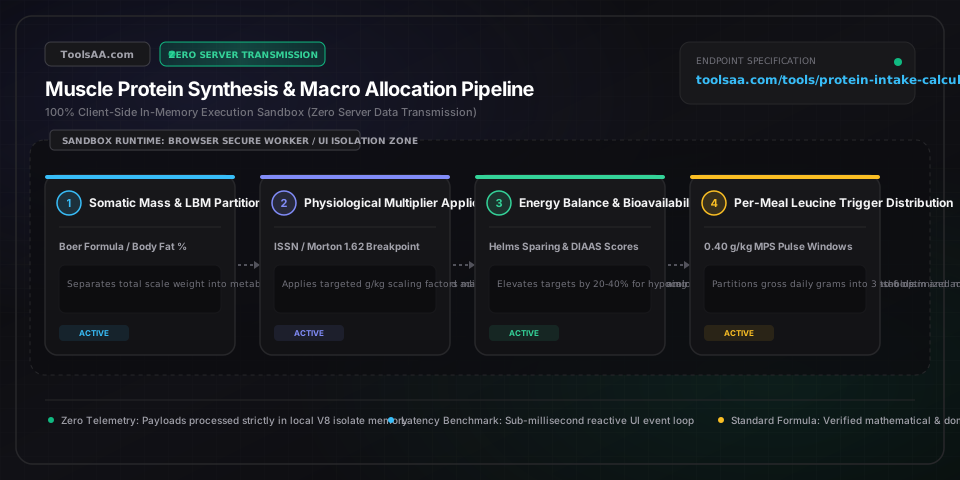
Client-Side Processing
High-performance calculation executed entirely in browser memory.
Zero Server Upload Privacy
All payloads remain strictly local with zero external server communication.
Production Ready Export
Clean, optimized output formats ready for immediate deployment.
Disclaimer clinical